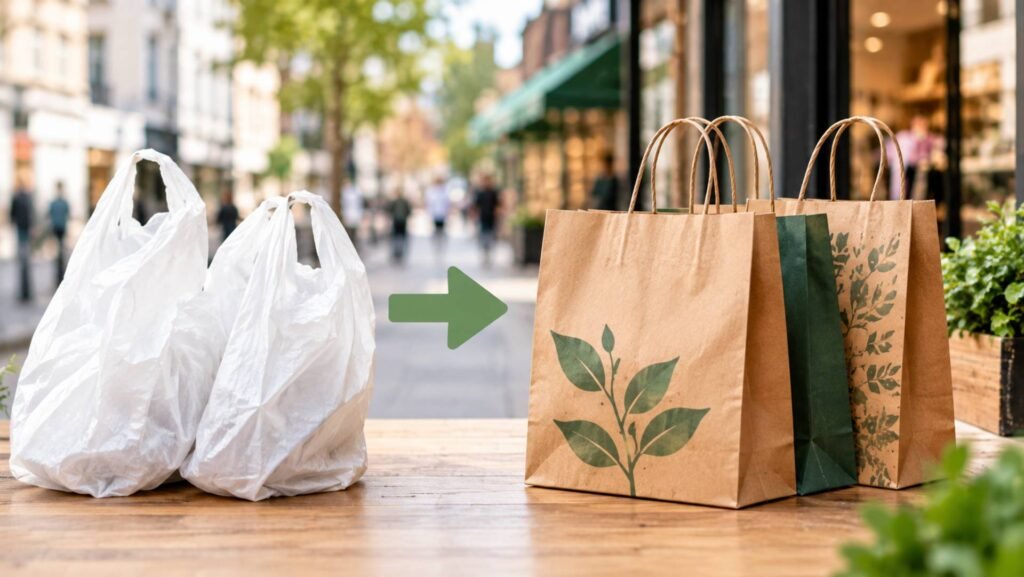
The UK plastic bag charge transformed retail packaging almost overnight. Single-use plastic carriers largely vanished. Paper options rose in their place. This article explores the lasting changes, the rise of better materials and why printed paper bags became a practical and popular choice for many businesses.
When the plastic bag charge arrived in England in 2015, few predicted how quickly shopping habits would shift. A small fee on single-use plastic carriers led to a sharp drop in their use. Retailers and customers adapted fast. Paper bags, reusable options and more considered packaging moved into the mainstream. Years later the effects remain clear. High streets look different. Branding opportunities have grown. Printed paper bags now serve both practical and promotional roles for shops of every size. Understanding these changes helps businesses choose packaging that meets current expectations and supports a cleaner approach.
The Immediate Impact of the Charge
The charge made free plastic carriers a thing of the past for larger retailers. Customers began bringing their own bags or accepting alternatives. Usage of single-use plastic bags fell dramatically within the first year. Supermarkets reported reductions of more than 80 percent in many cases. Smaller shops followed as the policy expanded and the fee rose. The policy created space for other materials to gain ground without forcing an overnight ban.
How Paper Packaging Stepped Forward
Paper bags offered a ready alternative that felt familiar and more acceptable to many shoppers. They are recyclable, biodegradable under the right conditions and easy to print. Retailers discovered that a well-made paper carrier could protect goods while displaying a logo clearly. Strength improved through better construction and handle designs. What began as a simple replacement gradually became a branding tool in its own right.
1. From Basic Carrier to Brand Asset
Early paper bags were often plain and functional. Over time businesses invested in better finishes, stronger handles and clear printing. A bag that looked good and felt solid encouraged reuse and left a positive impression. Printed paper bags turned a necessary item into mobile advertising that continued working after the customer left the shop.
2. Matching Material to Product Needs
Different goods require different levels of strength and presentation. Lightweight items suit simpler constructions. Heavier or higher-value products benefit from reinforced bases and comfortable handles. The range of paper options expanded to meet these varied demands without returning to single-use plastic.
3. Aligning with Customer Expectations
Shoppers increasingly notice packaging choices. A paper bag signals consideration for the environment in a way that plastic once did not. When the bag also carries clear, attractive branding it reinforces the store’s identity rather than disappearing into the background.
Wider Changes Across Retail Packaging
The charge did more than reduce plastic bags. It prompted many businesses to review all their packaging. Excess wrapping decreased. Materials with clearer recycling routes gained preference. Some sectors adopted reusable systems alongside paper options. The overall direction moved toward fewer throwaway items and more thoughtful design. This shift continues to influence decisions about size, print and finish.
Practical Advantages for Modern Retailers
Printed paper bags deliver several lasting benefits. They provide a clean surface for logos and messages. They feel substantial in the hand. They recycle easily in most household collections. Production methods allow for both short runs and larger wholesale orders, making them accessible to independent shops as well as bigger chains. The combination of practicality and visibility has kept demand steady years after the original policy change.
Expert Insights on the Long-Term Shift
Packaging specialists note that policy measures work best when alternatives are readily available and attractive. The plastic bag charge succeeded partly because paper and reusable options were already familiar. Experts also highlight that branding on paper carriers creates ongoing exposure at low cost. A bag carried through the high street or onto public transport reaches people who never entered the store. Consistency of quality and print remains important so the brand image stays positive over repeated use.
Choosing Packaging That Fits Today’s Market
Businesses selecting carriers now consider more than price alone. Strength, handle comfort, print quality and environmental credentials all matter. Matching the bag style to the product range and brand personality improves the customer experience. Testing samples for real-world use helps avoid weak points. Clear communication about recyclability supports the wider message of responsibility. These steps turn packaging from a cost into a quiet but effective part of the brand.
Looking Ahead at Retail Packaging Trends
The direction set by the plastic bag charge shows little sign of reversing. Customers expect materials that can be recycled or reused. Retailers continue refining their choices to balance cost, strength and appearance. Printed paper bags remain a flexible response that meets these needs while offering branding value. Further improvements in paper strength and printing techniques are likely to keep the option competitive. The market has moved from free plastic convenience toward more deliberate and visible packaging decisions.
A Lasting Change in How Goods Leave the Shop
The UK plastic bag charge altered retail packaging in lasting ways. Single-use plastic carriers declined sharply. Paper alternatives rose to fill the gap and evolved into useful brand carriers. Printed paper bags now combine practical strength with clear visual identity, giving shops of all sizes a tool that works both at the counter and beyond. The shift has encouraged broader thinking about materials, waste and customer experience. Years on, the high street reflects these changes in quieter, more considered packaging choices. Businesses that select well-made printed paper bags continue to benefit from the practicality and visibility that the post-charge landscape rewards. The original small fee has left a permanent mark on how goods travel home.