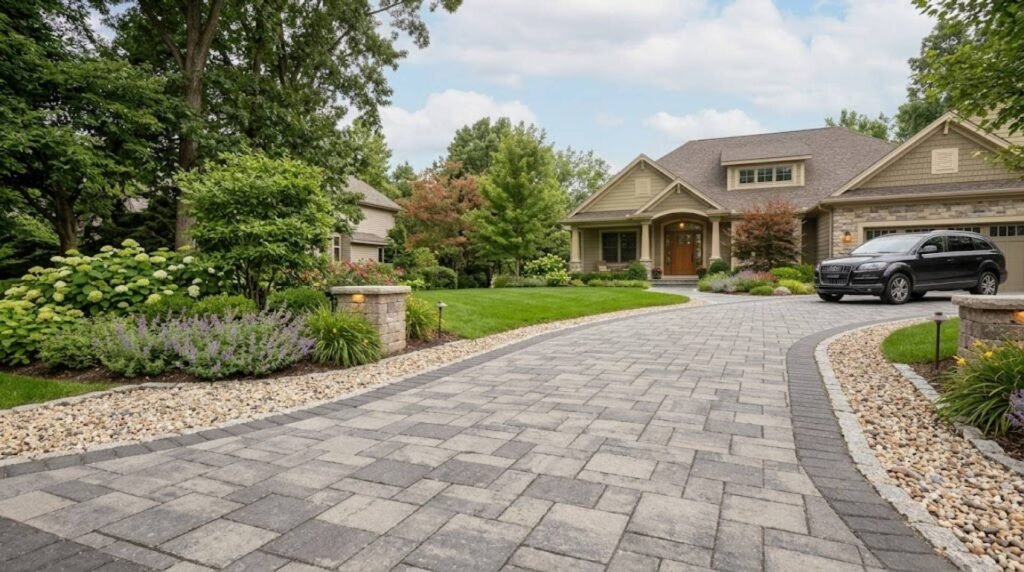
A well-designed driveway can make everyday parking easier while improving the overall appearance of a home. As one of the first features visitors notice, it plays an important role in defining the property entrance. Careful choices about materials, layout and finishing details can create a surface that is attractive, durable and practical.
Choose the Right Driveway Material
The best material will depend on your budget, preferred style, maintenance expectations and how frequently the driveway will be used. Each option has distinct practical and visual advantages.
Block Paving
Block paving is a popular choice because it offers considerable design flexibility. Blocks are available in different colours, shapes and laying patterns, making it easier to complement traditional and modern properties.
Individual blocks can also be replaced if they become stained or damaged. However, the joints may require occasional cleaning and weed control to maintain a neat appearance.
Resin Driveways
Resin-bound surfaces provide a smooth, contemporary finish and are available in various natural stone colours. When installed on a suitable base, the permeable surface allows rainwater to drain through it, helping to reduce surface water.
Homeowners considering resin driveways Watford should ensure the existing base and drainage arrangements are professionally assessed. Correct preparation is essential for preventing cracks, movement and premature surface failure.
Gravel Driveways
Gravel is often a cost-effective option for larger entrances. It suits rural and traditional homes particularly well and provides natural drainage when laid over a properly prepared sub-base.
The material may need occasional raking and topping up. Installing a suitable gravel grid can reduce movement, rutting and loose stones spreading onto nearby paths.
Consider Durability and Maintenance
A driveway must withstand vehicle weight, changing temperatures, rainfall and regular movement. Choosing durable driveway materials is important, but the quality of the foundations is equally significant.
A properly constructed sub-base helps prevent sinking, cracking and uneven areas. The required depth will depend on ground conditions, expected traffic and the chosen surface.
Before selecting a material, consider:
- How frequently the driveway will be used
- The number and weight of vehicles
- Cleaning and maintenance requirements
- Resistance to oil stains and tyre marks
- Expected lifespan and repair costs
- Local weather and drainage conditions
Plan the Layout Carefully
Measure the available area and consider how vehicles will enter, park and leave. A visually impressive driveway may still become frustrating if the layout makes turning or opening car doors difficult.
Allow sufficient room around each vehicle and avoid placing decorative features where they could restrict movement. If space permits, a wider entrance or turning area can make the driveway safer and more convenient.
When planning driveways Watford, homeowners should also check whether pavement access, dropped kerbs or planning permission requirements apply. Local authority approval may be necessary before altering access from a public road.
Improve Drainage and Control Surface Water
Poor drainage can cause puddles, slippery surfaces and damage to the driveway foundations. Water should be directed away from buildings rather than towards walls, garages or neighbouring land.
Permeable paving, resin-bound surfaces and gravel can support effective drainage when installed correctly. Other solutions may include channel drains, soakaways and carefully planned gradients.
In many situations, planning rules apply when covering a front garden with a non-permeable surface. Obtain appropriate advice before work begins, especially when changing a large area or directing water towards the road.
Add Attractive Finishing Features
Small design details can transform a basic parking area into an attractive entrance. Choose features that complement the home without making the space feel crowded.
Edging and Borders
Contrasting block borders can define the driveway and prevent gravel or soil from spreading. Brick, stone or concrete edging can also connect the driveway design with existing walls and pathways.
Lighting and Landscaping
Low-level lighting improves visibility after dark and can highlight paths, planting or entrance features. Select outdoor fittings designed for the British climate and position them so they do not cause glare for drivers or neighbours.
Planting beds, pots and low-maintenance shrubs can soften hard surfaces. Avoid large plants near vehicle sightlines, drainage channels or areas where roots could disturb the driveway.
Match the Driveway to the Property
The surface should feel like a natural extension of the home. Traditional brickwork may suit warm-toned block paving, while a contemporary property may benefit from a simple resin finish with clean edging.
Limit the number of colours and materials to maintain a balanced appearance. Coordinating the driveway with pathways, boundary walls and the front door can strengthen kerb appeal without compromising everyday practicality.
Conclusion
Creating a successful driveway requires more than choosing an attractive surface. The material, foundations, drainage and layout must work together to support daily use. With careful planning and well-chosen finishing details, homeowners can create a functional, durable and welcoming entrance that enhances the entire property.